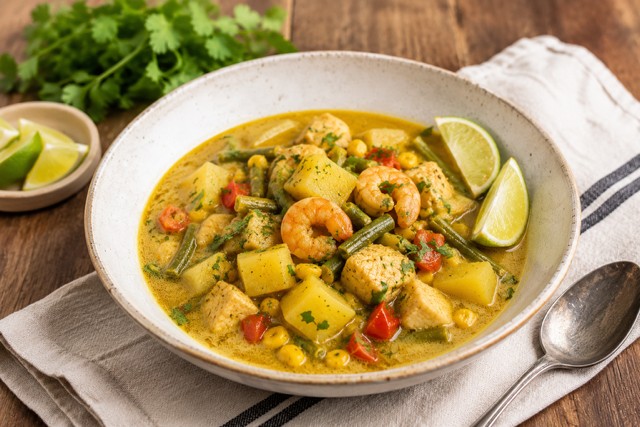
I worked out in Lake Louise Alberta for a summer as a young adult. The restaurant that I worked at gave us free meals while we were in training so we could learn the menu. They had a seafood chowder that would knock your socks off! It was heavy and creamy and so satisfying. I’ll never forget the taste. If the idea of seafood in a soup makes you cringe, I encourage you to give it a try at least once!
While traditional seafood chowders are often made with heavy cream, I have fallen in love with making mine using creamy coconut milk and fragrant yellow curry instead. The coconut milk creates a rich, velvety broth without feeling overly heavy, while the curry adds warmth and depth that pairs beautifully with seafood. The result is a nourishing meal that feels both comforting and fresh.
Everyone in my house likes this chowder recipe. It is simple to prepare, packed with wholesome ingredients, and flexible enough to use whatever seafood you have on hand.
*This post may contain affiliate links. Please read my privacy & disclosure policy here.
Living Far From the Ocean
We don’t live in a coastal region and fresh seafood is not something we have easy access to. Unless we catch lake fish ourselves, most seafood has already travelled a long distance before it reaches our local grocery store.
I have realized that wild caught seafood is almost non-existent in my local grocery stores. For a long time, I assumed that meant seafood would only be an occasional meal in our home. Then I discovered that buying frozen wild caught seafood online was actually a wonderful option.
The seafood arrives frozen right to our door, allowing me to keep a variety in the freezer whenever I want to make a healthy meal. I have been incredibly happy with the quality, and I love knowing that I always have nutritious seafood available without making a special trip to the city.
Many people are surprised to learn that frozen seafood can actually be fresher than seafood displayed in the grocery store. Much of the “fresh” seafood sold at seafood counters has already been frozen during transportation and simply thawed before being displayed for sale. Freezing seafood shortly after it is harvested helps preserve both its flavour and nutritional value.
Wild Caught or Farm Raised?
When shopping for seafood, you’ll usually find two main choices, wild caught or farm raised.
We choose wild caught seafood. Wild fish live in their natural environment and eat the foods nature intended for them. Depending on the species, they often have a different nutritional profile than farm raised fish, and many people find they have a cleaner flavour and firmer texture.
Farm raised seafood can certainly fit into a family’s budget, but not all fish farms operate the same way. The quality of feed, stocking density, water quality, and farming practices can vary considerably. If you choose farm raised seafood, it is worth taking a few extra minutes to learn about the company producing it.
One thing that often causes confusion is the word “organic.” Wild fish cannot be certified organic because nobody controls what they eat or the waters they live in. In other words, there is no such thing as certified organic wild caught fish. If you ever see the words “organic wild caught” together, it is worth taking a closer look at the claim.
A Healthier Twist on Traditional Chowder
One of my favourite things about this recipe is that it skips the heavy cream without sacrificing any of the richness.
Full fat coconut milk creates an incredibly creamy broth while adding healthy fats that help make this soup satisfying. The coconut flavour is very mild and blends beautifully with the yellow curry, garlic, onion, celery, carrots, and potatoes.
The yellow curry gives the chowder a beautiful golden colour and a gentle warmth that is comforting without being overly spicy. Even our children enjoy it because the coconut milk softens the spices into a smooth, mellow flavour.
Together, the coconut milk and curry transform a classic seafood chowder into something a little different while still feeling familiar and comforting.
Why Seafood Deserves a Place on the Menu
Seafood is one of my favourite proteins because it cooks quickly and provides an impressive variety of nutrients. It is naturally rich in high quality protein and contains important vitamins and minerals including iodine, selenium, vitamin B12, and omega 3 fats that support brain health, heart health, and overall wellbeing.
This chowder is incredibly flexible. Shrimp, salmon, cod, haddock, scallops, mussels, clams, or a frozen seafood blend all work beautifully. You can use one type of seafood or combine several for extra flavour and variety. The online shop that we buy our seafood from now actually has a frozen chowder blend, so they premix a variety of options into one pack.
Buying frozen also makes it easy to reduce food waste because you can thaw only what you need for each meal.
Simple Ingredients That Nourish
Potatoes make the chowder hearty enough to be a complete meal. As I’m writing this post, potatoes are in season and fresh potatoes taste so amazing in the chowder. Onion, celery, carrots, and garlic create a flavourful base, while coconut milk and yellow curry build a rich broth that tastes like it simmered for hours. I didn’t have many fresh vegetables last time I made this recipe, so I added an organic frozen mixed vegetable and it worked beautifully. The seafood is added near the end of cooking, helping it stay tender and perfectly cooked.
Serve this chowder with homemade sourdough bread, biscuits, or a simple green salad for a nourishing meal that everyone can enjoy.
Real Food That Fits Real Life
Healthy eating does not have to be complicated or expensive. Sometimes it simply means making thoughtful choices with the foods that are available where you live.
I hope this recipe encourages you to try something a little different. Whether you live by the ocean or in the middle of the countryside like we do, nourishing your family is less about perfection and more about consistently choosing wholesome ingredients, cooking from scratch and in season whenever you can, and enjoying the simple gift of sharing a meal together.
If you’ve been following my blog for awhile, you may have noticed that I love recipes with yellow curry. Here’s another to check out if you love it too: https://naturallynourishedfamily.com/yellow-curry-chicken-soup-recipe/
Healthy Yellow Curry Seafood Chowder with Coconut Milk
Equipment
- Large soup pot or Dutch oven
- Cutting Board
- Sharp Knife
- Wooden Spoon
- Measuring cups and spoons
Ingredients
- 2 tbsp butter, ghee, olive oil, or avocado oil
- 1 med onion diced
- 3 cloves garlic minced
- 2 stalks celery diced
- 2 med carrots diced
- 3 med potatoes peeled and cubed, yukon gold work well
- 2 Tbsp yellow curry powder
- 1 tsp onion powder
- 1/2 tsp garlic powder
- 1/2 tsp sea salt
- 1/4 tsp fresh ground pepper
- 4 cups broth seafood, chicken or vegetable
- 1 tsp Dijon mustard
- 14 oz. full fat coconut milk
- 3 cups seafood of choice (shrimps, scallops, cod, haddock, mussels, etc…) thawed if frozen
- 1 Tbsp tamari or soy sauce adds umami flavour
- 1 Tbsp fresh lemon juice
- 2 Tbsp fresh parsley optional for garnish
Instructions
- Heat the butter or oil in a large soup pot over medium heat.
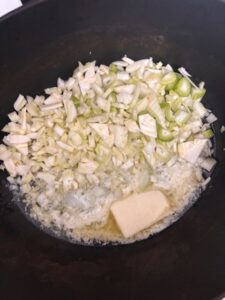
- Add the onion, celery, and carrots. Cook for about 5 to 7 minutes, stirring occasionally, until the vegetables begin to soften.
- Stir in the garlic and cook for another minute until fragrant.
- Sprinkle in the yellow curry, onion powder, garlic powder, salt, and pepper. Stir well for about 30 seconds to toast the spices.
- Add the potatoes, broth, and tamari. Bring to a boil, then reduce to a gentle simmer for 15 to 20 minutes until the potatoes are fork tender.
- Stir the Dijon mustard into the coconut milk, then pour it into the soup. Return to a gentle simmer.
- Add the frozen seafood. Simmer gently for 5 to 7 minutes, just until the seafood is cooked through. Avoid boiling, as seafood can become tough if overcooked.
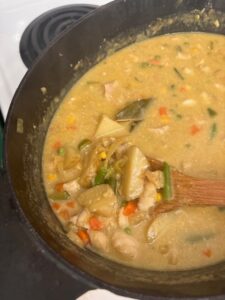
- Stir in the fresh lemon juice and taste. Adjust the salt, pepper, or curry powder if desired.
- Ladle into bowls and garnish with fresh parsley. Serve with warm sourdough bread, biscuits, or crackers.
Notes
- A frozen seafood chowder blend makes this recipe incredibly easy and usually contains a delicious mix of shrimp, scallops, fish, and shellfish.
- Feel free to substitute fresh vegetables with frozen vegetables when your fridge is looking a little empty. They work beautifully in this recipe.
- For a thicker chowder, mash a few of the cooked potatoes against the side of the pot before adding the seafood.
- Leftovers will keep in the refrigerator for up to 3 days. Reheat gently over low heat. Avoid boiling after the seafood has been added.
- Freezing is not recommended once cooked, as seafood can become rubbery and the coconut milk may separate slightly after thawing.